How the companies of Schwarz Group and their partners are making logistics lower in emissions, more efficient and future-proof.
Logistics in Transition
Logistics is the backbone of the supply chain and is on the verge of a fundamental transformation. Geopolitical uncertainties, volatile markets and increasing demands on supply chains are creating greater pressure to act. Supply networks must function reliably, be resilient to risks and operate with minimal emissions and low resource consumption. As dynamic trends, technological advancements, demographic shifts and new regulations continue to shape logistics, we are responding to this change with forward-looking transformation.
The companies of Schwarz Group, together with their partners, demonstrated how this can be achieved at Future Day 2026. Under the motto “Sustainable Logistics – Partnering to Shape the Future,” more than 650 decision-makers, freight forwarders, suppliers and innovation leaders gathered at the Kaufland logistics center in Geisenfeld on September 24, 2026. The focus was on concrete solutions for the logistics of tomorrow – from automation and digital applications to alternative drive technologies, the circular economy and new approaches for working environments.
A Platform for the Logistics Ecosystem
Future Day provided a forum for discussion, networking and concrete ideas. The companies of Schwarz Group were represented by the divisions Lidl, Kaufland, Schwarz Produktion, PreZero, Schwarz Digits and Schwarz Corporate Solutions. The strength of the companies of Schwarz Group lies in the collaboration among the divisions and the resulting unique ecosystem comprising production, retail, the circular economy and digitalization. Working together, all companies of Schwarz Group pool their expertise to transform the complex challenges of logistics into strategic opportunities.
Keynote speeches, panel discussions and expert talks addressed the industry’s most pressing issues. Interactive workshops covered topics such as calculating transportation emissions and the future of demand planning. It became clear that future-proof logistics is driven not only by new technologies, but also by better data, common standards and collaboration between companies and partners.
The on-stage events were complemented by a 600-square-meter Experience Zone featuring themed areas on people, the environment and innovation. At the companies’ stands, participants discussed partnership models, networking strategies and concrete solutions ranging from alternative drive technologies and the circular economy to robotics and automation, as well as data governance and digital sovereignty.
Innovations in Real-World Operations
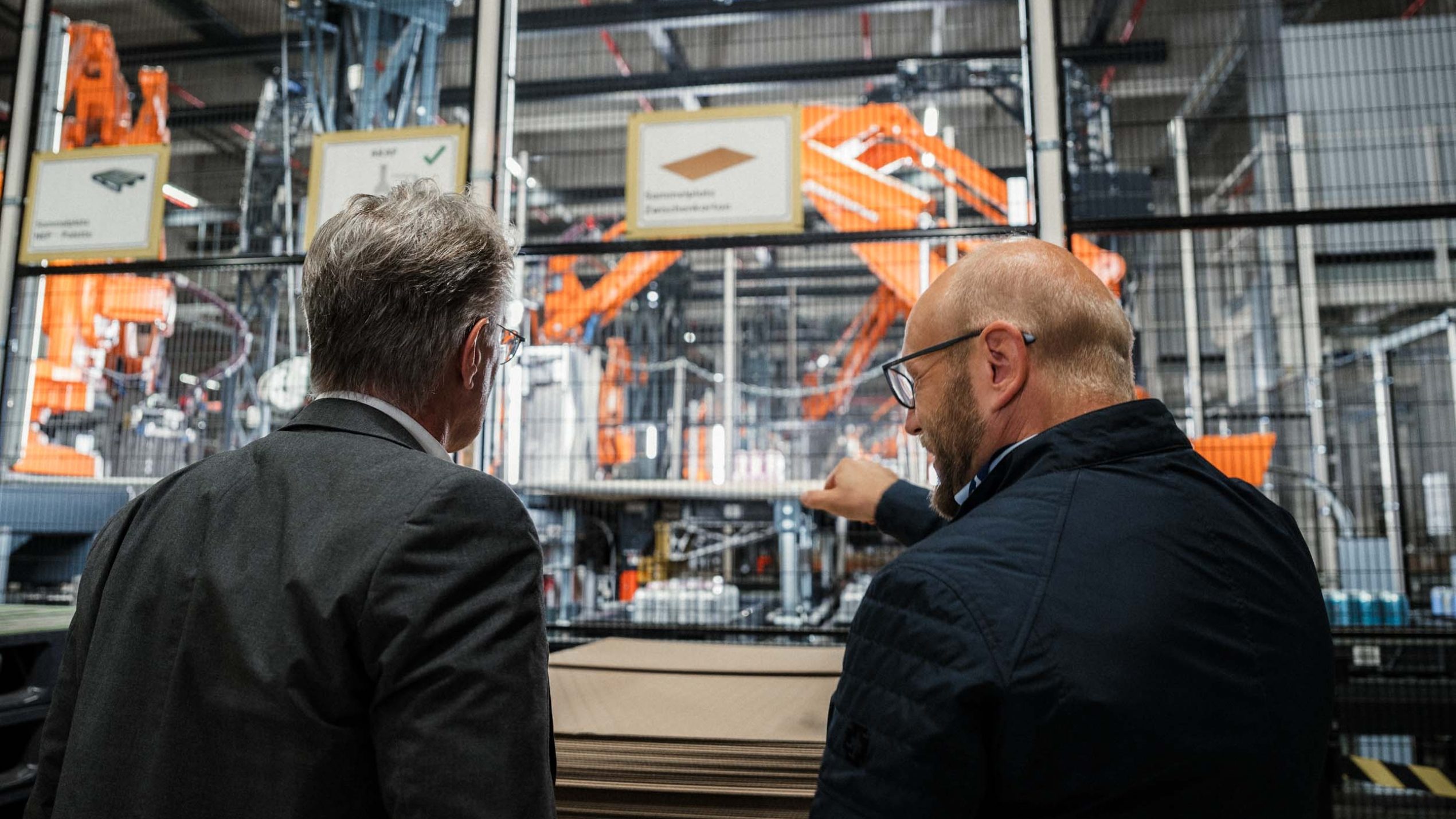
Future Day not only showcased innovations but allowed attendees to experience them up close in regular operations. Kaufland gave participants an insight into a fully automated food order picking solution – including the opportunity to see autonomous inspection robots in action.
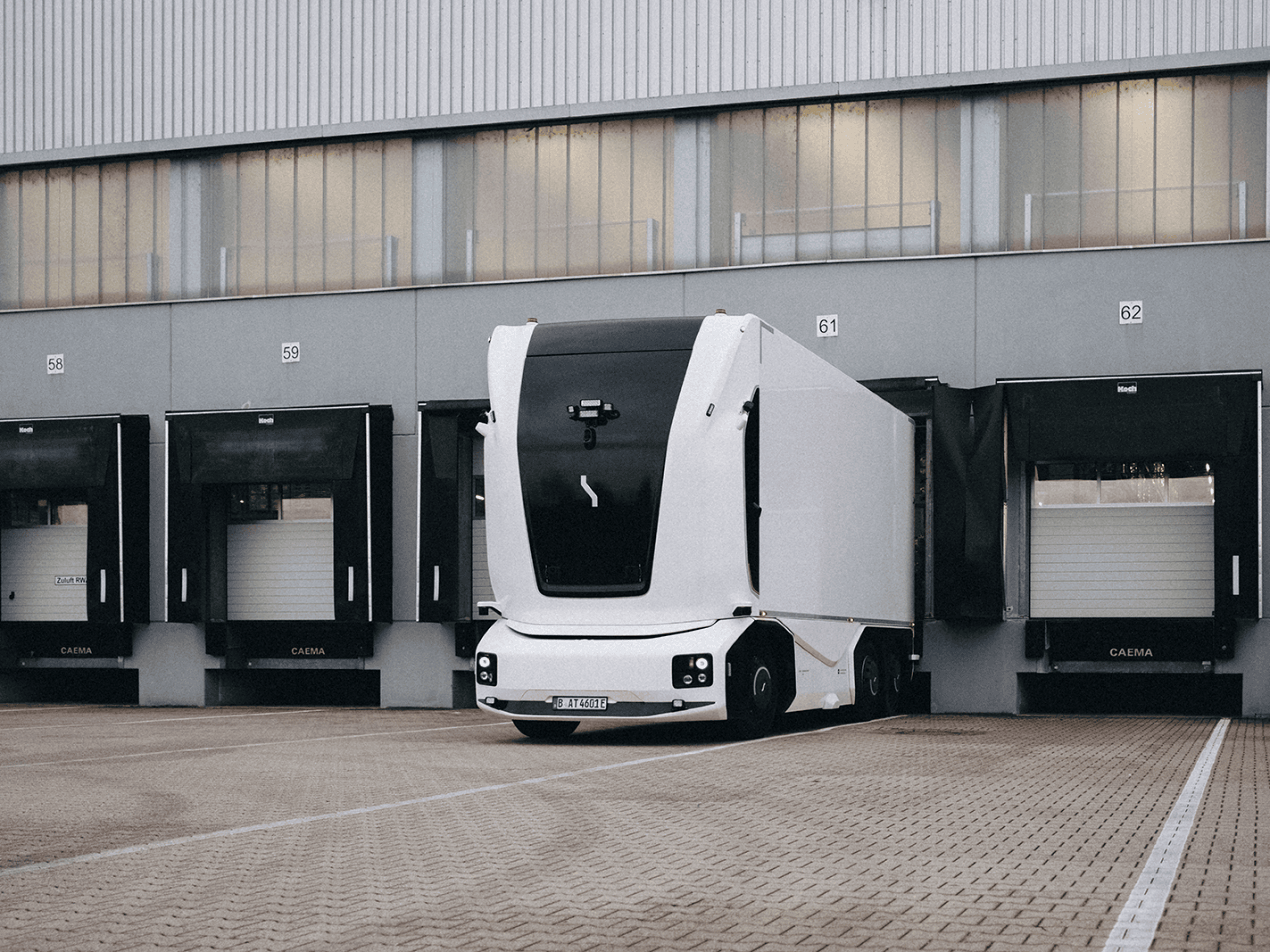
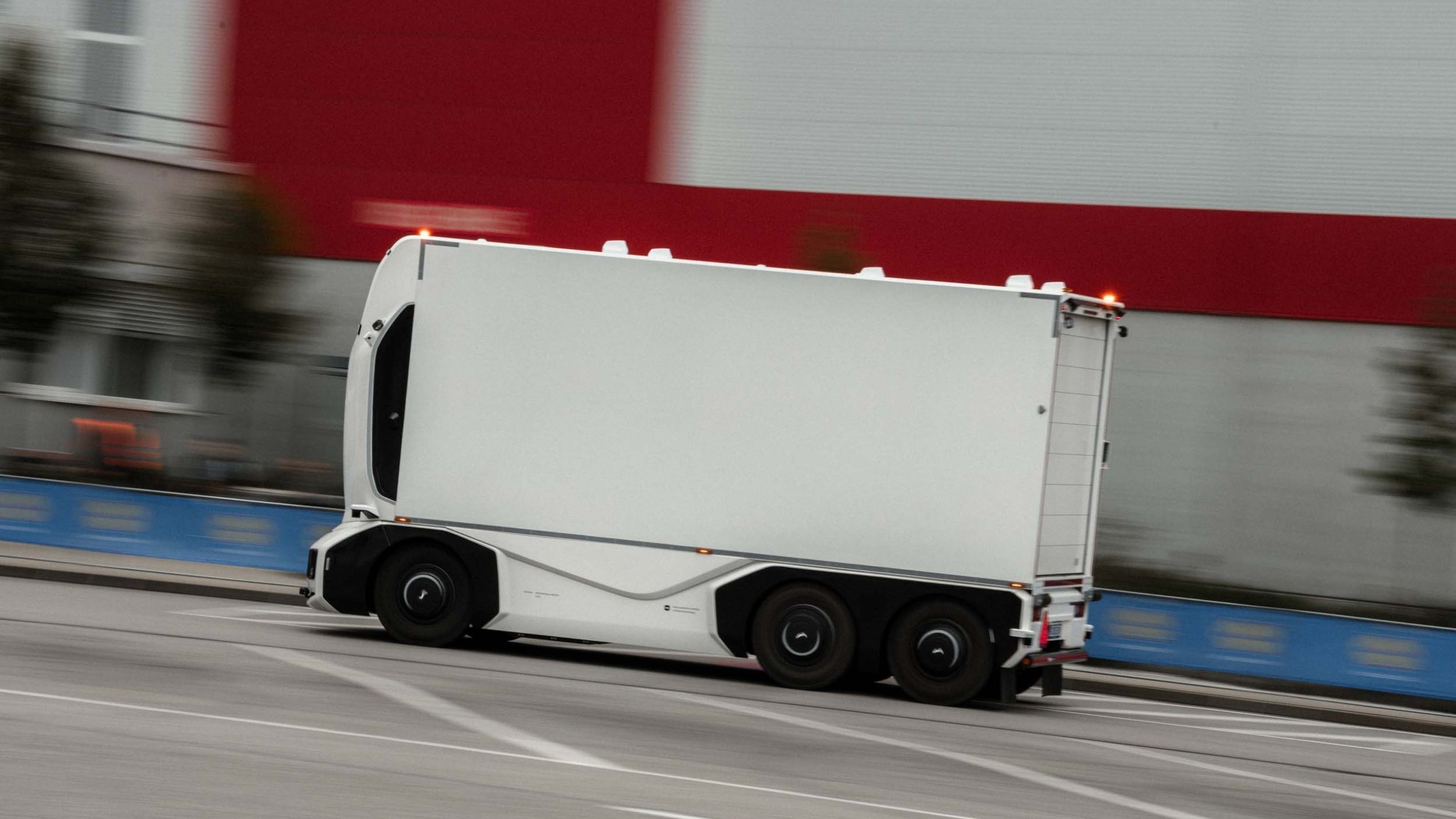
Autonomous driving also became a reality: A cabless electric truck with autonomous driving capabilities (Level 4) was on display for the first time in live operation. Lidl in Germany, together with its technology partner Einride, is the first food retailer to use it for store deliveries on public roads in Germany (learn more). Participants were able to witness firsthand how a technology that had long been considered a vision of the future is being integrated into day-to-day store operations under real-world conditions.
For the companies of Schwarz Group, the project also serves as an example of how joint innovations can be leveraged within the ecosystem. Lidl in Germany is rolling out the technology in its operations in collaboration with Einride. Schwarz Logistics Solutions is supporting the implementation process, pooling expertise and exploring how the insights and synergies can also be leveraged for other companies and logistics processes.
Further insights showed how data and digital solutions make logistics more resilient. Kaufland illustrated how data-driven demand planning provides more accurate demand forecasts and manages the flow of goods to meet demand, ensuring greater freshness, quality and planning reliability. Schwarz Digits demonstrated why secure data infrastructures and responsible data governance are key foundations for digital sovereignty and resilient supply chains.
Environment: Decarbonization and the Circular Economy
For the companies of Schwarz Group, technological innovation and environmental responsibility must always go hand in hand. Achieving lower-emission logistics requires more than just alternative drive technologies. It also requires the right infrastructure, reliable data and a willingness to work together to develop processes further.
The companies of Schwarz Group are therefore working together to systematically expand the charging infrastructure and the use of electric trucks, while optimizing the flow of goods, capacity utilization and routes:
- Decarbonization of the transportation fleet: As a key step on their path to net zero by 2050, the companies of Schwarz Group are systematically advancing the decarbonization of their logistics operations, including through optimized utilization of transportation modes, smart route planning and the increased use of lower-emission drive systems. While Lidl in the Netherlands is switching its store deliveries entirely to electric vehicles by 2027, PreZero is gradually converting its waste collection fleet to electric and alternative drive technologies.
- Decarbonization in shipping operations: TAILWIND Shipping Lines is implementing targeted carbon reduction measures in maritime shipping, such as investing in new dual-fuel LNG vessels and optimizing routes and networks.
- Electric trucks with autonomous driving capabilities: The Level 4 truck being tested by Einride and Lidl in real-world operations in Edermünde runs entirely on electricity and combines autonomy with reduced emissions.
- Infrastructure expansion & partner incentivization: The transition to battery-electric heavy-duty trucks is made possible by the targeted deployment of charging infrastructure across the entire network. Kaufland will partner with charging infrastructure operators at all of its German distribution centers to scale up the use of electric trucks.
To reduce transportation emissions in a more targeted manner in the future, we need more reliable emissions data and a common foundation for concrete measures. During the workshop on calculating transportation emissions, participants discussed how data can help make emissions visible and identify opportunities for reduction, as well as support the effective implementation of measures.
The holistic circular economy strategy REset REsources developed jointly by the companies of Schwarz Group also became a tangible reality at Future Day. The recyclables separation process at the Kaufland logistics center in Geisenfeld demonstrated how the facility is implementing the “Road to Zero Waste” in its day-to-day operations. The focus was on how materials can best be kept in circulation.
At the PreZero stand, battery recycling was used as an example to demonstrate how critical raw materials can be recovered and secured for the supply chains of tomorrow. Schwarz Produktion provided an insight into the PET recycling loop: Used PET bottles are compressed into bales for space-saving transport to the recycling plants. Foldable mesh crates are used to ship the preforms made from PET regranulate. This helps reduce the number of trips and the associated fuel consumption.
These examples show how the companies of Schwarz Group are jointly organizing circular economy initiatives across a range of business segments.
At the Center of It All: People
Technological progress and social responsibility are not mutually exclusive. Modern logistics is future-ready when technological innovation supports people and lightens their workload.
Smart robotics solutions and automated food order picking can take over physically demanding lifting and sorting tasks, thereby improving ergonomics in the warehouse. Autonomous driving systems can transform tasks and job roles in on-site logistics and reduce the workload for people by taking over routine routes. This creates capacity for value-adding tasks in which people remain irreplaceable and firmly in control. For this transformation to succeed, continuous learning, skills development and employee empowerment are becoming increasingly important.
Social responsibility does not end at a company’s gate. Lidl defines binding social standards and minimum requirements for logistics business partners and promotes dialog on industry-wide standards in the food retail industry. The PreZero driving school offers training and development opportunities for professional drivers – for companies of Schwarz Group and business partners, as well as employment agencies and job centers.
This brings together the technological and social dimensions of logistics: Technology provides data and takes on demanding tasks. People remain crucial when it comes to exercising judgment, responsibility and shaping change.
Shaping the Logistics of the Future Together
Future Day 2026 showed that lower-emission, efficient, future-proof logistics cannot be achieved through individual efforts alone. It arises where human expertise, technological innovation and long-term partnerships come together.
The companies of Schwarz Group view their collaboration in logistics as a key, circular link in their ecosystem. Future Day provided a platform to develop this ecosystem further together with strong partners – through discussions on data, technologies, infrastructure, work environments and concrete solutions for real-world operations.
Securing the supply chains of tomorrow starts with building partnerships today.