
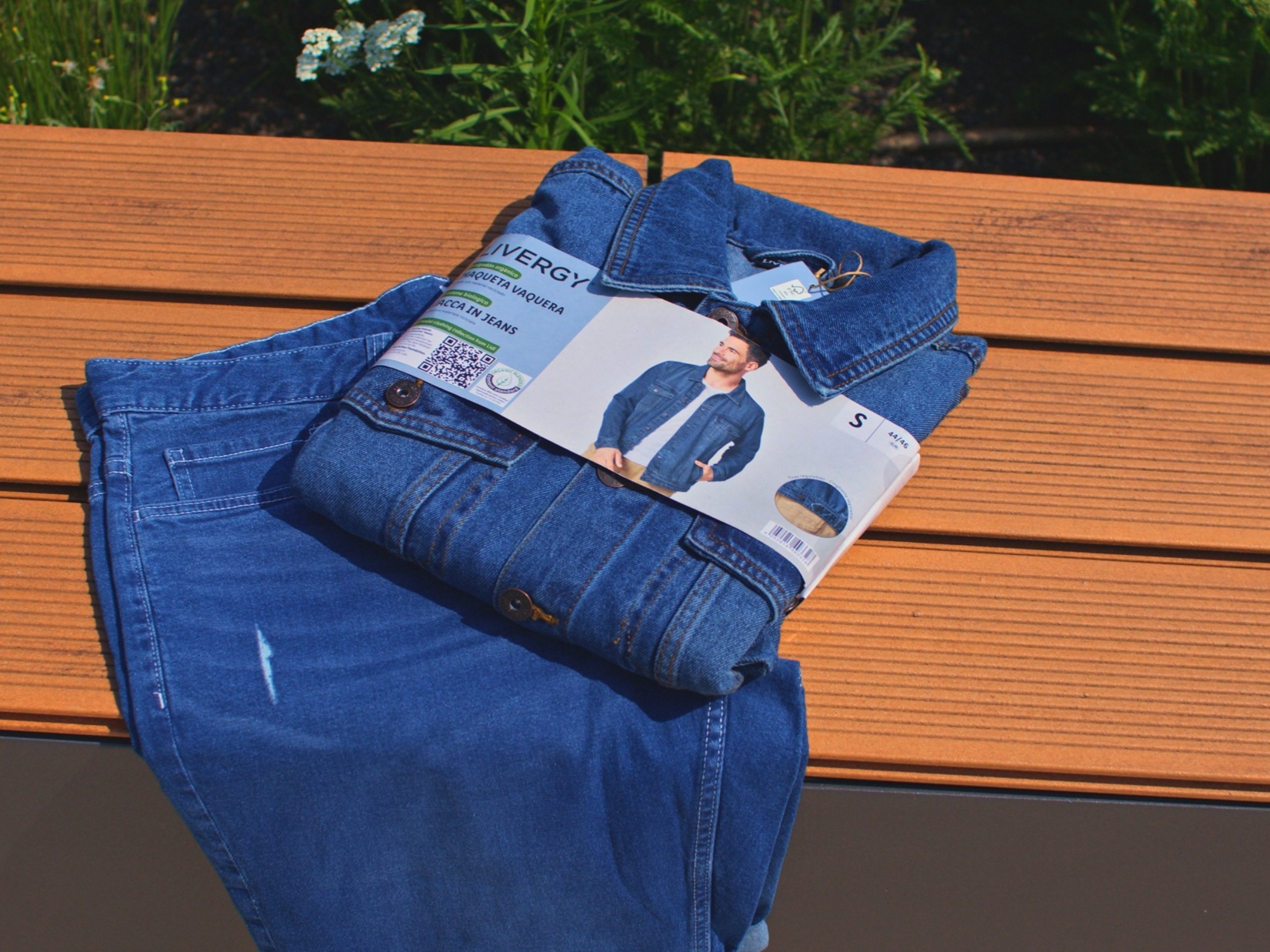
New Standards in Textile Design: Design for Recycling
Jeans are the ultimate basic item in any wardrobe and can be worn in a casual or classic style. It's no wonder that denim is at the center of a project on recyclable textile design. As part of the Ellen MacArthur Foundation's "The Jeans Redesign" project, 80 industry experts have drawn up guidelines for the production of denim textiles based on the circular economy principles.
From April to September 2025, Lidl ran a campaign with a recyclable jeans collection based on these principles. With this campaign, Lidl proved that "Design for Recycling" can be a key to reducing the fashion industry's environmental footprint.
Circular Economy Starts with Design
Responsible textile design uses recyclable and circularmaterials that can easily be recycled. Separating mixed materials is one of the difficulties in recycling. The "End of Life" of fabrics and materials such as threads, buttons and zippers therefore need to be considered from the outset.
So, what's so special about Lidl's recyclable jeans collection?
- Material composition: the textiles consist of at least 98 percent cellulose-based fibers and contain at least 5 percent recycled material.
- Fiber production: only cellulose-based fibers produced in accordance with certified environmental standards.
- Design for reuse: all small parts such as buttons have been designed so that they can be easily removed later.
- Dispensing with conventional methods: during production, no galvanization or sandblasting was used to create the used look, making the denim fabric easier to reuse.

Designing fashion to save resources
The recyclable jeans collection is more than just a step towards change; it is a clear commitment to a circular economy within the textile industry. From the choice of materials to the design for recyclability, the companies of Schwarz Group show that fashion can be more than just chic and innovative – it can also be resource-saving. The collection is a great example of the REdesign action area from our jointly developed circular economy strategy "REset Resources". Our guiding principle in this field is: "We design our business models to align with circular economy principles."