Limited availability of goods, rising raw material prices and low planning reliability: Already today, climate change poses huge challenges for many companies. Not acting is not an option. Climate protection is becoming a key indicator of competitiveness and resilience.
For the companies of Schwarz Group, sustainable business activity is the strategic answer to the energy and resource challenges of our time and is crucial for the future viability of their respective business models. Rather than backing off from ambitious targets during these uncertain times, the companies of Schwarz Group are strategically driving forward climate protection and are acting ahead.
In order to live up to their responsibility as a global retail group and make an active contribution to efforts to combat climate change, the companies of Schwarz Group have jointly set themselves a target of net zero by 2050.
By 2050 at the latest, the companies of Schwarz Group will permanently reduce all of their greenhouse gas emissions along the entire value chain to net zero. Unavoidable residual emissions, e.g., from agricultural processes, will be neutralized through carbon removal solutions in accordance with the SBTi standard.
To reach their net-zero target by 2050, the companies of Schwarz Group have jointly set a series of near-term and long-term climate targets, which were validated by the Science Based Targets initiative (SBTi).
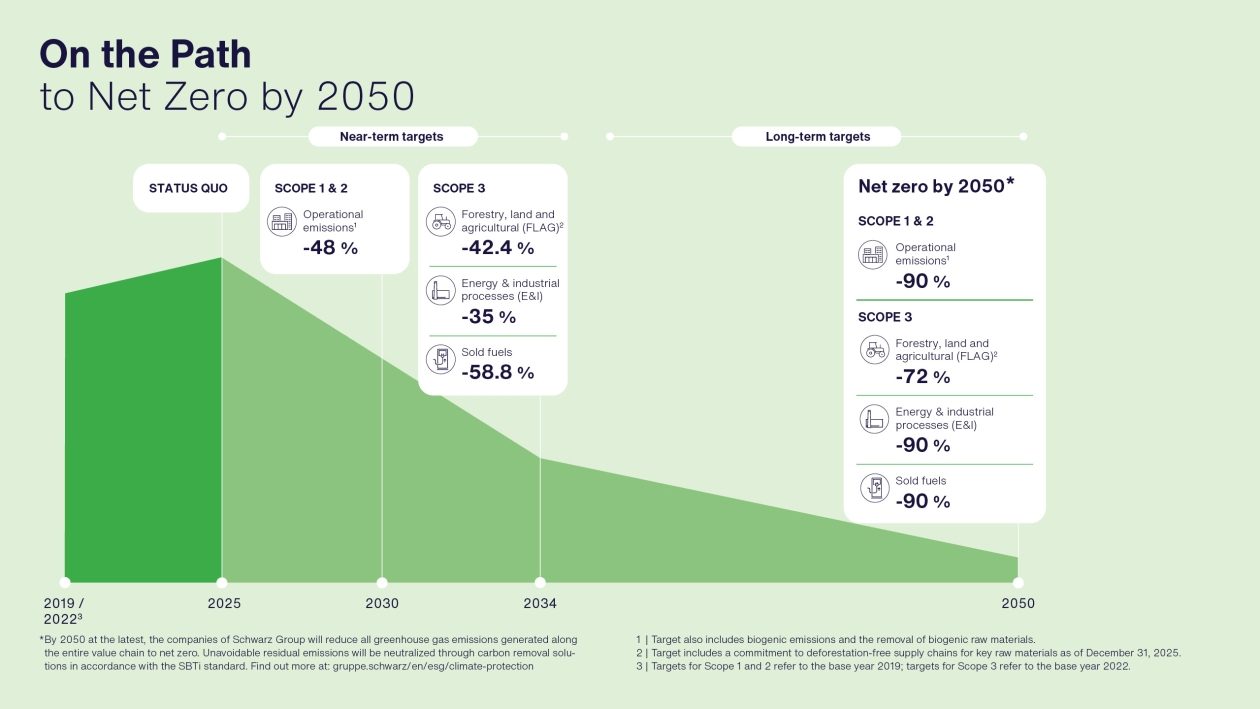
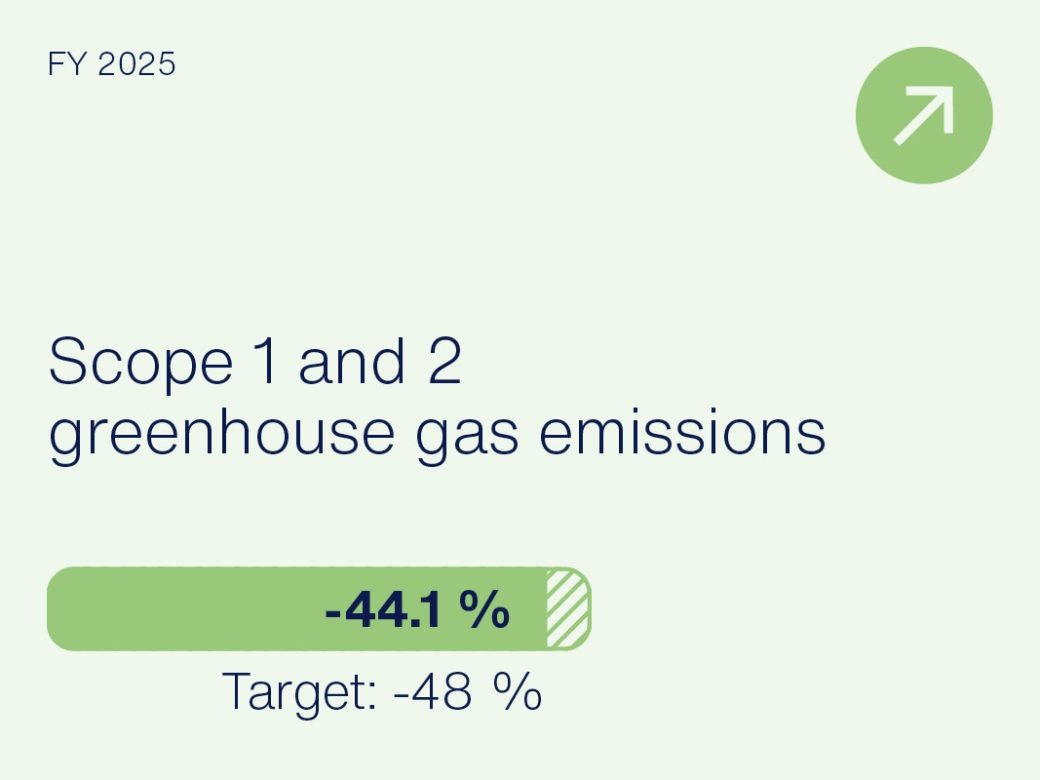
By 2030, the companies of Schwarz Group will reduce their operational emissions by 48 percent compared with the base year 2019. The target also includes biogenic emissions and the removal of biogenic input materials.
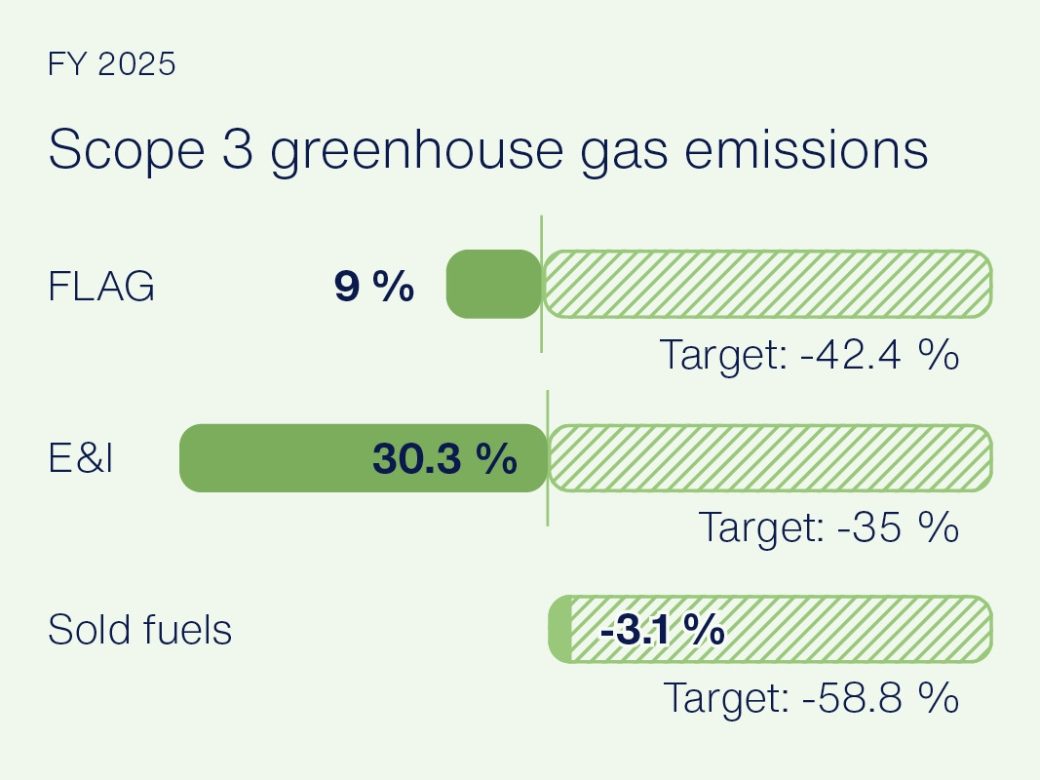
By 2034, the companies of Schwarz Group will reduce their indirect forestry, land and agricultural emissions (FLAG) by 42.4 percent (includes the commitment to deforestation-free supply chains for key raw materials from December 31, 2025), indirect emissions from energy and industrial processes (E&I) by 35 percent and emissions from sold fuels by 58.8 percent compared with the base year 2022.
By 2050, the companies of Schwarz Group will reduce their operational emissions by 90 percent compared with the base year 2019.
By 2050, the companies of Schwarz Group will reduce their indirect forestry, land and agricultural emissions (FLAG) by 72 percent; indirect emissions from energy and industrial processes (E&I) and emissions from sold fuels by 90 percent compared with the base year 2022.
The jointly prepared carbon footprint of the companies of Schwarz Group is based on figures from the 2025 fiscal year and was calculated in accordance with the guidelines of the GHG Protocol.
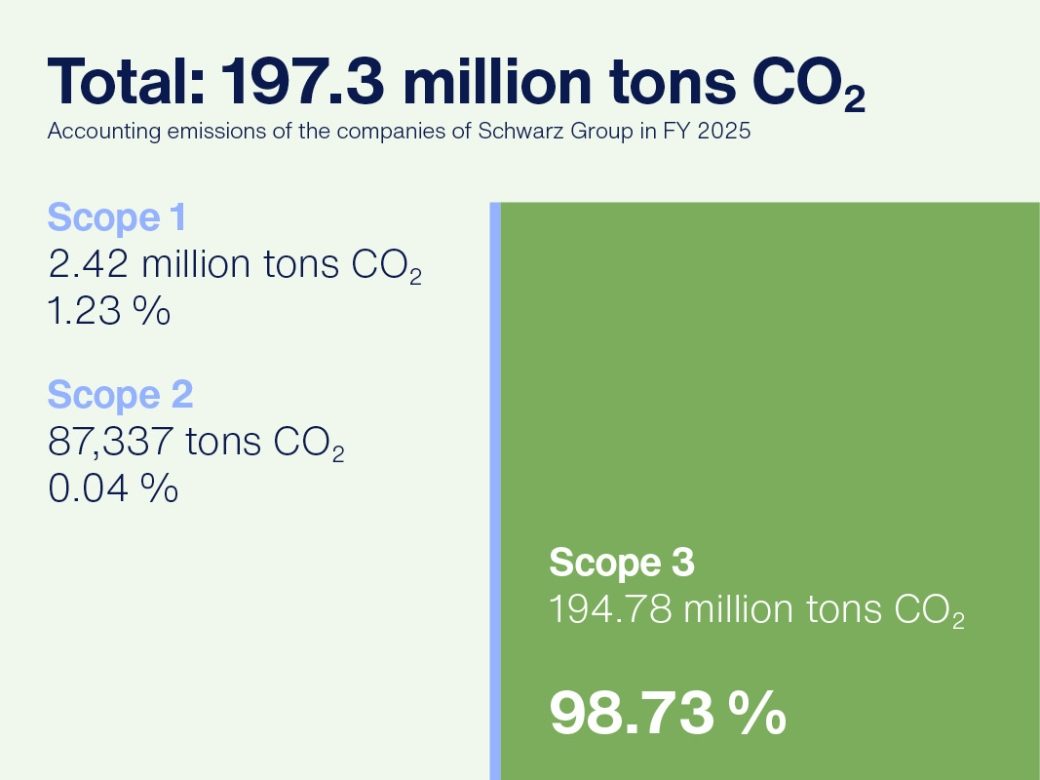
In the 2025 fiscal year, the companies of Schwarz Group recorded an increase in total emissions of more than 10 percent year on year. This development is primarily due to the continuous growth of the corporate group as well as an increased volume of goods in the retail divisions. This is particularly reflected in the increase of indirect greenhouse gases in the upstream and downstream value chain (Scope 3).
Despite this growth dynamic, operational emissions (Scope 1 and 2) once again fell slightly in the reporting period. We were able to reduce our direct emissions (Scope 1) by using fewer fossil fuels and lowering refrigerant emissions. At the same time, progress in expanding renewable energy led to a slight decrease in indirect energy-related emissions (Scope 2).
With a jointly developed climate transition plan, we as companies of Schwarz Group are establishing a strategic tool to achieve our collectively defined targets. It outlines key levers on the path to net zero, forming the basis for future-proofing our respective business processes. We are continuously working to further define our Climate Transition Plan.
The reduction of operational greenhouse gas emissions forms a central pillar of the jointly developed climate strategy of the companies of Schwarz Group. We have committed to reducing these emissions by 48 percent by 2030 compared with the base year 2019. By 2050, we will reduce our operational greenhouse gas emissions by 90 percent and contribute to our net-zero target.
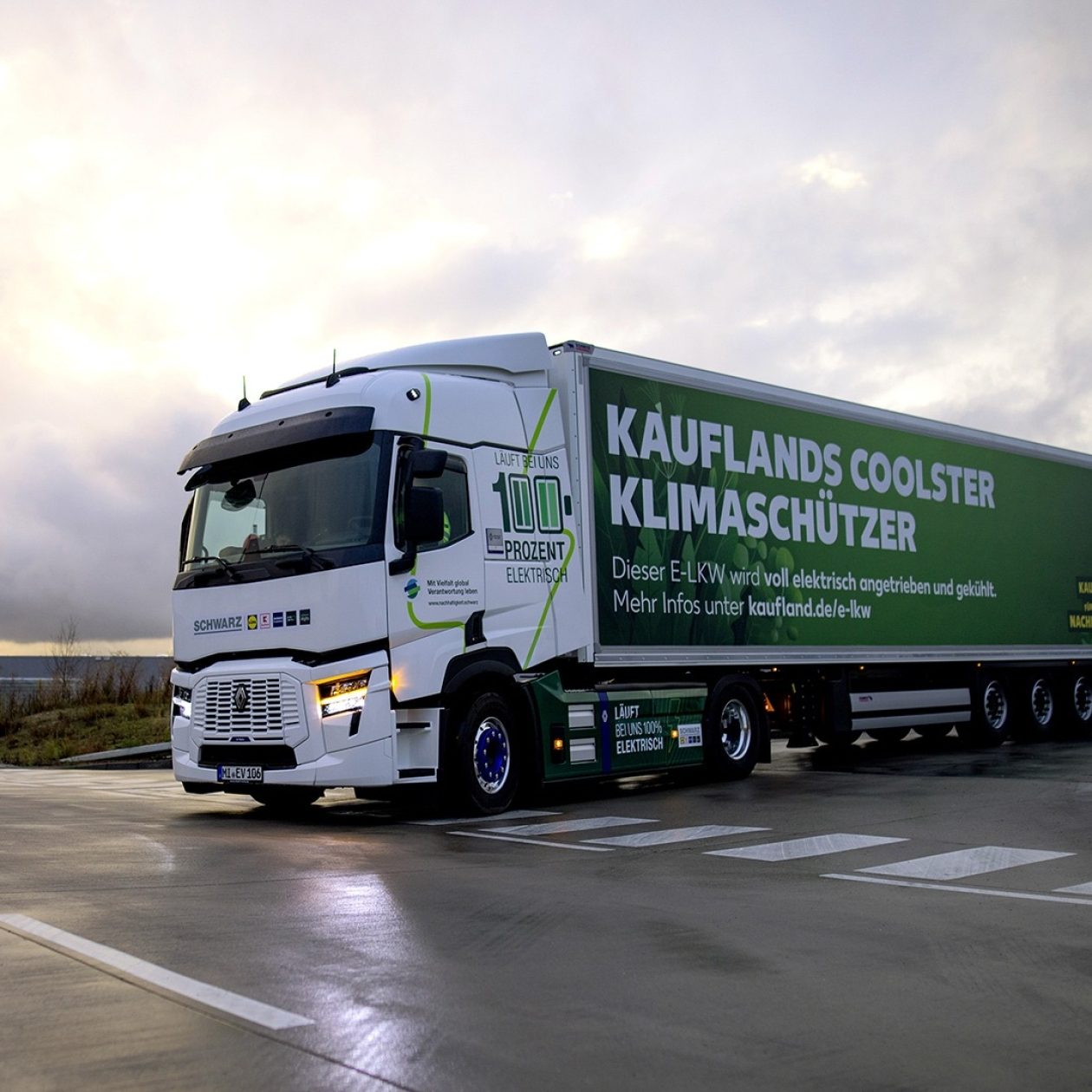
The companies of Schwarz Group are continuously fine-tuning their logistics processes, particularly by optimizing capacity utilization across all modes of transport, streamlining route planning and consistently evaluating lower-emission alternatives. In procurement logistics, Lidl’s own shipping company, TAILWIND Shipping Lines, is, for example, implementing targeted measures to reduce emissions. In addition, PreZero is driving efforts to decarbonize its disposal logistics among other measures by converting its fleet to electric powertrains and alternative fuels.
As a retail group, the companies of Schwarz Group record approximately 98 percent of their carbon emissions in the upstream and downstream value chain (Scope 3). This represents both a complex challenge and a crucial lever to achieving net zero for the companies of Schwarz Group. Despite the challenging complexity caused by limited influence, complex supply chains and insufficient data availability, the companies of Schwarz Group identify the reduction of their Scope 3 emissions as an essential tool for climate protection.
Reduction of Product Emissions (FLAG)
The Scope 3.1 category comprises all emissions from purchased goods and services, representing the main portion of the carbon footprint of the companies of Schwarz Group. A crucial lever in this regard are FLAG emissions (Forest, Land, and Agriculture) resulting from land use within our supply chain. To proactively address these, the companies of Schwarz Group have set themselves an ambitious, science-based target. By fiscal year 2034, absolute Scope 3 FLAG emissions are to be reduced by 42.4 percent (base year 2022).
Promoting a plant-based diet is a key lever for achieving our climate targets, as animal products account for a large share of product emissions. A conscious food transition not only protects our planet’s resources, but also enriches our diets with healthy and delicious alternatives. That is why we align our approach with the EAT-Lancet Commission’s recommendations regarding the Planetary Health Diet. In doing so, Lidl and Kaufland
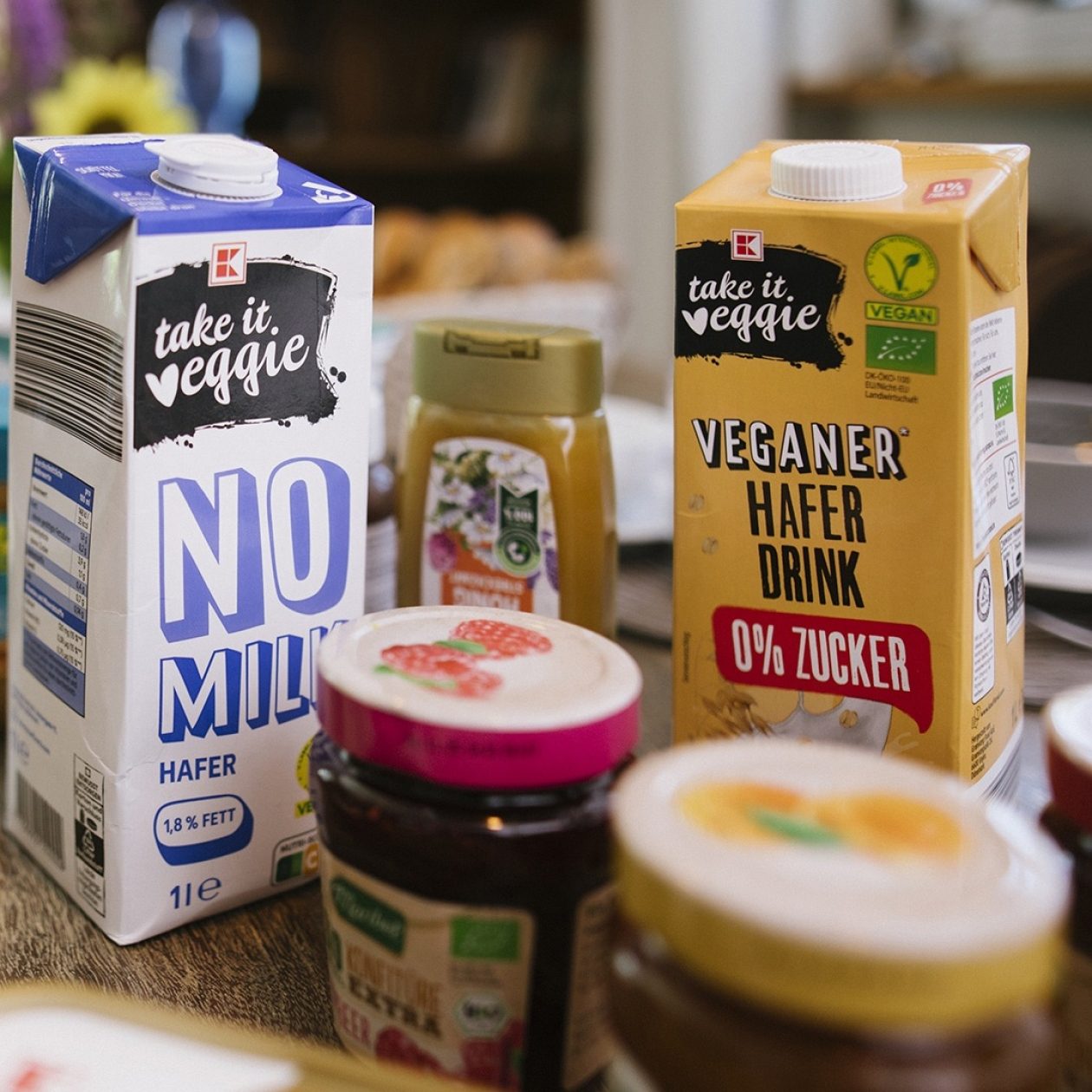
are focusing on expanding their plant-based ranges, optimized product placement, attractive pricing and transparent monitoring based on WWF methodology. An example of this approach is price parity at Lidl and Kaufland in Germany, which matches the prices of plantbased private labels products with their animal-based counterparts.
The Scope 3.1 – emissions in energy and industrial processes (E&I) addresses the emissions from industrial processing, packaging and the nonfood area.
In this segment, the companies of Schwarz Group have set themselves a binding, science-based target: By fiscal year 2034, indirect emissions in the area of energy and industrial processes are to be reduced by 35 percent (base year 2022).
Packaging is responsible for about 5 percent of Scope 3.1 emissions. To reduce these emissions as part of our climate targets, the companies of Schwarz Group rely on the jointly developed, holistic circular economy strategy REset Resources. In practice, we achieve this by optimizing our packaging portfolio: For example, we are reducing the weight of packaging, increasing the proportion of recycled materials, and promoting innovative solutions such as regionally sourced Silphium and straw fibers. Other levers include the use of single-use and multi-use systems as well as the transition to recyclable packaging designs. In this way, we contribute to the decarbonizing our value chain through efficient resource management.

In the area of upstream value creation, we focus on continuously refining the data baseline and implementing operational incentive systems. A key lever is the continuous improvement of the accounting methodology for capital goods in order to manage environmental impacts more precisely. To decarbonize transport routes, we promote the use of low-emission technologies by purposefully providing freight forwarders and suppliers with EV charging infrastructure at our locations, thereby incentivizing the transition to battery-electric heavy-duty trucks. In addition, we are working on the systematic reduction of waste.
In the downstream value chain, the focus is on conserving resources and encouraging lower-emission consumer behavior. We reduce the environmental impact of our products and packaging over their entire life cycle. The goal is to systematically reduce the remaining carbon footprint in the use and post-use phases through innovative recovery processes and the promotion of reuse. We achieve this primarily by continuously increasing the energy efficiency of our devices.
The in-house generation of renewable energies as well as energy- and resource-efficient construction for their stores, logistics centers, and administrative buildings play a central role in the climate strategy of the companies of Schwarz Group. In addition, the companies of Schwarz Group are continuously driving forward the decarbonization of logistics.
Net zero describes the aim of reducing greenhouse gas emissions throughout the entire value chain to a minimum. Since, scientifically, it is assumed that even after undertaking significant reduction efforts some emissions will remain, these residual emissions must be neutralized by implementing removal solutions (e. g., technical carbon dioxide sinks) within or outside the value chain. (see SBTi Glossary)
On the other hand, climate neutrality can theoretically be achieved on a purely accounting basis by purchasing external carbon credits from climate protection projects – even if emissions remain high. In accordance with the GHG Protocol and SBTi, the companies of Schwarz Group exclude this practice in their jointly developed climate strategy, referring exclusively to the net-zero target vision in their climate communications.
The Science Based Targets initiative (SBTi) is a voluntary joint initiative of the Carbon Disclosure Project (CDP), the United Nations Global Compact, the World Resources Institute and the World Wide Fund for Nature (WWF), with over 11,000 companies and financial institutions participating worldwide.
The companies of Schwarz Group have joined the Science Based Targets initiative (SBTi) in 2020 and submitted their joint net-zero commitment in fiscal year 2024. In 2025, the SBTi validated the short- and long-term climate targets of the companies of Schwarz Group as well as their joint net-zero target, confirming their scientific basis.
The independent audit and validation by the SBTi confirms that the companies of Schwarz Group are following a clearly defined emission reduction pathway and that their commitment makes an effective contribution to limiting global warming to 1.5 degrees by the end of the century.
The GHG Protocol (Greenhouse Gas Protocol) provides globally standardized frameworks for measuring and managing greenhouse gas (GHG) emissions. These guidelines serve to account for emissions from private and public sector activities, value chains and mitigation measures.
The GHG Protocol is based on a partnership between the World Resources Institute (WRI) and the World Business Council for Sustainable Development (WBCSD) and is applied in collaboration with governments, industry associations, NGOs and businesses.